




Sustainable finance is no longer just a trend. It is a strategic approach that helps organizations align financial growth with environmental responsibility and social well-being. Whether you are a business leader, investor, or policymaker, understanding this concept is essential to remain competitive and responsible in today’s global economy.
In this blog, we will explore sustainable finance principles, its principles, frameworks, benefits, and how companies like ETIAconsult in the Netherlands are helping organizations transition toward a more sustainable financial future.
To begin with, let us clearly define responsible financial strategies.
Sustainable finance refers to financial services and investment decisions that incorporate environmental, social, and governance criteria into business or investment strategies. In simple terms, it means directing capital toward activities that not only generate profits but also contribute positively to society and the environment.
The green finance definition goes beyond traditional financial analysis. It includes evaluating how investments impact climate change, resource usage, human rights, and ethical governance.
When businesses understand responsible financial strategies, they begin to prioritize long-term value creation instead of short-term gains.
Understanding sustainability-focused finance is important because the global economy is undergoing a major transformation. Stakeholders are no longer satisfied with profit alone. They expect responsibility, transparency, and sustainability.
Organizations are facing increasing pressure to reduce their carbon footprint. Eco-conscious finance supports investments in renewable energy, green infrastructure, and low-emission technologies.
Investors today actively seek companies that align with ESG principles. They want their money to contribute to meaningful change while still delivering returns.
Governments worldwide are introducing policies that encourage or mandate sustainable practices. Understanding sustainability-focused finance helps companies stay compliant and competitive.
Companies that adopt sustainability strategies gain trust and credibility, which directly impacts customer loyalty and market positioning.
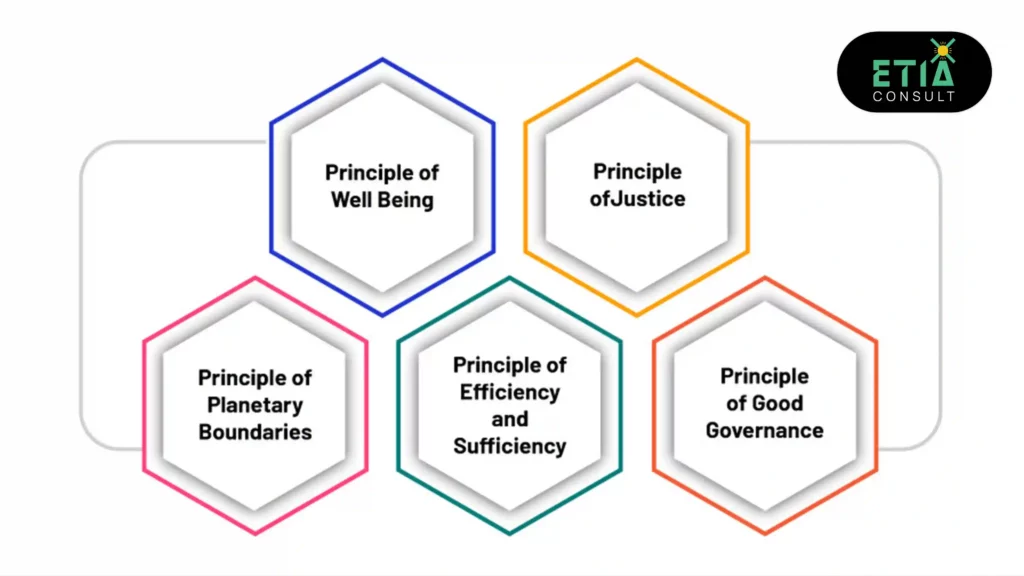
To truly grasp green finance strategy, it is essential to understand its foundational pillars.
This includes investments in clean energy, pollution reduction, and conservation of natural resources.
Companies must consider employee welfare, community impact, diversity, and ethical supply chains.
Transparent leadership, ethical business practices, and accountability are critical components.
Together, these principles form the backbone of a robust socially responsible finance framework that guides decision-making.

A sustainable finance framework provides structured guidelines that organizations follow to integrate sustainability into their financial strategies.
Incorporating environmental, social, and governance factors into financial analysis and investment decisions.
Identifying risks related to climate change, regulatory shifts, and social impact.
Tracking sustainability metrics alongside financial performance.
Communicating sustainability efforts clearly to stakeholders.
Organizations that implement a strong conscious capital strategy framework can make informed decisions that balance profitability with responsibility.
The concept of Corporate Sustainability 2.0 represents the next evolution of business responsibility. It moves beyond basic compliance and focuses on embedding sustainability into the core strategy of an organization.
How conscious capital strategy Enables Corporate Sustainability 2.0
Financial decisions are aligned with long-term sustainability goals.
Investment in green technologies and sustainable solutions drives innovation.
Businesses generate value not only for shareholders but also for society and the environment.
When companies embrace Corporate Sustainability 2.0, they position themselves as future-ready organizations that can adapt to changing market dynamics.
Understanding What is Sustainable Finance reveals several benefits that go beyond ethical considerations.
Companies can anticipate and mitigate environmental and social risks more effectively.
Investors are increasingly funding sustainable initiatives, making it easier to secure financing.
Businesses that prioritize sustainability stand out in crowded markets.
Sustainable practices often lead to cost savings and operational efficiency.
A commitment to sustainability builds trust among customers and stakeholders.
One of the most compelling aspects of resilient finance model is its ability to fuel future growth.
By investing in sustainable solutions, companies unlock new opportunities in emerging markets such as renewable energy, circular economy models, and green technologies.
Solar, wind, and hydro investments are expanding rapidly.
Eco-friendly buildings and smart cities are becoming the norm.
Companies are developing products that reduce environmental impact.
Organizations that understand finance for long-term growth can strategically position themselves to fuel future growth while contributing to global sustainability goals.
While the benefits are significant, adopting purpose-led finance is not without challenges.
Many organizations still do not fully understand ethical financial planning.
Measuring ESG performance can be complex and inconsistent.
Different regions have varying standards and requirements.
Transitioning to sustainable practices may require upfront investment.
This is where expert guidance becomes crucial.
ETIAconsult, based in the Netherlands, plays a vital role in helping organizations navigate the complexities of purpose-led finance.
Why Choose ETIAconsult?
Expertise in Sustainable Strategies
ETIAconsult provides tailored solutions that align financial performance with sustainability goals.
Customized Framework Development
They help businesses design and implement a robust purpose-led finance framework.
Regulatory Compliance Support
Their team ensures that organizations meet global sustainability standards and regulations.
Innovation-Driven Approach
ETIAconsult focuses on innovative solutions that drive efficiency and long-term success.
By partnering with ETIAconsult, businesses gain a trusted advisor who understands sustainable investment planning and how to implement it effectively.
If you are ready to embrace conscious capital strategy, here are practical steps to get started.
Evaluate your existing financial strategies and identify areas for improvement.
Set clear objectives aligned with ESG principles.
Create a structured conscious capital strategy framework tailored to your organization.
Incorporate environmental, social, and governance criteria into decision-making.
Track progress and maintain transparency with stakeholders.
The future of finance is undeniably sustainable. As global challenges intensify, the importance of understanding sustainable investment planning will continue to grow.
Emerging Trends
Digital Transformation
Technology is enabling better tracking and reporting of sustainability metrics.
Green Bonds and Investments
Financial instruments dedicated to sustainable projects are gaining popularity.
Global Collaboration
Countries and organizations are working together to achieve sustainability goals.
Businesses that adapt early will have a significant advantage in this evolving landscape.
To summarize, responsible financial strategies is more than just a financial concept. It is a strategic approach that integrates profitability with responsibility. By adopting ethical finance practices, organizations can drive long term growth, manage risks, and contribute to a better future.
With the right partner, such as ETIAconsult in the Netherlands, businesses can seamlessly transition into sustainable operations and stay ahead in a competitive market.
If your organization is looking to align financial success with sustainability, now is the time to act. Responsible finance is not just the future, it is the present.
What is responsible financial strategies refers to managing investments and financial activities in a way that considers environmental, social, and governance factors alongside profit.
It helps businesses reduce risks, improve reputation, and achieve long-term profitability while contributing to environmental and social well-being.
A sustainable finance framework is a structured approach that guides organizations in integrating sustainability into financial decision-making.
It enables businesses to embed sustainability into their core strategies, driving innovation and long-term value creation under Corporate Sustainability 2.0.
ETIAconsult provides expert guidance, customized frameworks, and strategic solutions to help organizations successfully implement sustainable finance practices.
Adding {{itemName}} to cart
Added {{itemName}} to cart