


analytical insights is becoming an important part of how organisations plan, operate and compete as the sector responds to evolving market conditions, changing consumption patterns, renewable energy integration and increasingly complex regulatory requirements. Decisions that once depended largely on historical reports and established operating practices now require a more detailed understanding of market behaviour, asset performance and emerging risks. By connecting information from energy markets, operational systems, weather forecasts and consumption data, businesses can develop a clearer understanding of the factors influencing their decisions.
Understanding the Role of analytical insights
energy insights refers to the processes, technologies and analytical capabilities used to understand energy markets, monitor performance and support informed business decisions. It combines information from multiple sources to provide a more complete picture of changing market conditions.
For energy producers, traders, utilities and large energy consumers, this understanding can influence everything from procurement strategies to investment planning. Electricity prices, fuel costs, generation availability, grid constraints and weather conditions can all affect operational and financial outcomes. Traditionally, these factors were often examined through separate reports and systems — bringing them together allows organisations to identify relationships that might otherwise remain unnoticed.
Effective energy insights helps organisations move beyond simply understanding what has happened. It supports a more informed assessment of why conditions have changed and what those changes could mean for future decisions.
For example, a manufacturer reviewing electricity consumption alongside wholesale prices may identify opportunities to adjust energy-intensive activities during expensive periods, while a renewable energy operator can compare generation forecasts with market conditions to improve planning.

Connecting Energy Markets Through Market Intelligence
Energy markets operate through interconnected systems involving generation, transmission, distribution, trading and consumption. A change in one area can influence conditions elsewhere, making reliable market information essential. Electricity prices may respond to fuel availability, renewable generation, demand fluctuations, transmission constraints and changes in weather, and in interconnected markets, developments in neighbouring regions can also influence prices and trading opportunities.
Market intelligence helps organisations interpret these relationships rather than examining individual signals in isolation. By monitoring relevant indicators, businesses can develop a clearer view of:
- Wholesale electricity and fuel prices
- Supply and demand conditions
- Renewable generation forecasts
- Cross-border trading opportunities
- Regulatory developments
- Imbalances between expected and actual demand
The value of this information depends on its relevance and timeliness. A market report that arrives after a trading window closes may have limited operational value, even if its analysis is accurate. Platforms such as the ENTSO-E Transparency Platform give European market participants free, continuous access to the generation, load and cross-border data that underpins reliable market intelligence.
The Growing Importance of Energy Data Analytics
Energy data analytics provides the foundation for turning large volumes of information into useful insights. Energy organisations increasingly work with data from smart meters, sensors, trading platforms, weather services, generation assets and enterprise systems — when these sources are analysed together, they can reveal patterns that support better planning and resource allocation.
For example, historical consumption data can help identify recurring demand peaks. Comparing these patterns with weather conditions, production schedules and electricity prices may reveal opportunities to reduce costs without disrupting essential operations. Useful applications of energy data analytics include:
- Forecasting electricity demand and renewable generation
- Identifying unusual consumption patterns
- Monitoring asset performance and equipment efficiency
- Analysing price volatility and market behaviour
- Evaluating procurement costs and operational expenditure
- Measuring progress towards energy-efficiency targets
Nevertheless, analytical results are only as reliable as the information behind them. Inconsistent formats, missing readings and delayed updates can undermine otherwise sophisticated models, so organisations need dependable data collection, validation and governance practices alongside analytical tools.
From Market Intelligence to Decision Intelligence
Understanding market conditions is valuable, but organisations also need to determine what those conditions mean for their specific objectives. This is where decision intelligence becomes increasingly relevant. Decision intelligence connects data analysis with business context, operational constraints and defined outcomes — instead of presenting information without direction, it helps decision-makers evaluate possible actions and understand their potential consequences.
Consider an energy procurement team deciding whether to purchase electricity through a fixed-price agreement or maintain greater exposure to variable market prices. Market intelligence can describe current conditions, while analytical models can examine different price scenarios — decision intelligence brings these findings together with the organisation’s budget, risk tolerance and consumption requirements. The final decision still requires human judgement, but the supporting evidence becomes clearer and more consistent. A structured decision-making process may involve:
Define the Objective
Define the business objective and relevant constraints.
Collect Reliable Information
Collect reliable market and operational information.
Evaluate Scenarios
Evaluate possible scenarios and their financial implications, then compare alternatives against agreed criteria.
Implement & Monitor
Implement the selected approach and monitor its results.
This process can also improve accountability. When decisions are supported by documented assumptions and measurable outcomes, organisations can review what worked, identify shortcomings and refine future strategies.
The Role of Energy Technology and Automation
Advances in energy technology are making it easier to collect, process and distribute information across complex energy operations. Cloud platforms, connected sensors, automated data pipelines and advanced forecasting tools can help organisations access relevant information without relying entirely on manual reporting. Automation is particularly useful when decisions depend on frequent updates — for example, a monitoring platform may identify an unexpected change in asset output and notify the operations team.
Artificial intelligence and machine learning are expanding these capabilities by identifying patterns in large datasets and supporting predictive analysis. As the IEA’s Energy and AI report highlights, AI can improve demand forecasting, detect anomalies and optimise grid operations — but it should be introduced with clear objectives and appropriate safeguards. Important considerations include:
- Maintaining data quality and system reliability
- Establishing access controls and cybersecurity measures
- Reviewing model performance as market conditions change
- Keeping appropriate human oversight for significant decisions
- Ensuring recommendations can be explained and audited
Energy technology is most useful when it addresses a defined operational need — introducing new systems without considering existing workflows can create additional complexity instead of improving decision-making, which is why ETIAConsult pairs new tools with technology integration work that connects them to how teams actually operate.
Renewable Energy and the Need for Better Forecasting
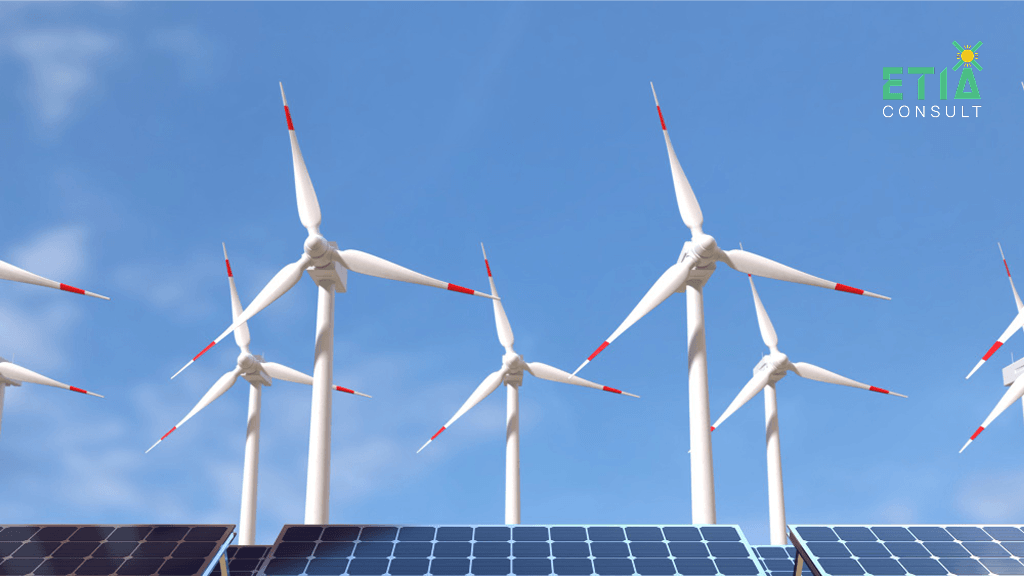
The growing role of renewable energy is increasing the importance of accurate forecasting and coordinated market information. Solar and wind generation depend on weather conditions, which can change the amount of electricity available at different times — these variations influence balancing requirements, trading decisions and the operation of conventional generation assets, and can also create challenges for organisations seeking to align electricity supply with demand.
These decisions depend on market rules, asset characteristics and local conditions. Analytics can support the process, but they cannot eliminate uncertainty — as energy systems become more varied and decentralised, connecting reliable forecasts with timely operational decisions will remain an important priority.
Building a Data-Driven Strategy for Energy Businesses
A data-driven strategy requires more than investing in software. Organisations must establish clear objectives, reliable processes and a culture in which evidence contributes meaningfully to everyday decisions. The starting point is to identify the questions that matter most — a business focused on reducing procurement costs may need different information from a generator seeking to improve asset availability or a trader monitoring short-term market exposure. A practical implementation approach includes:
- Defining measurable business objectives
- Assessing existing data systems and identifying gaps
- Integrating relevant market, financial and operational datasets
- Establishing consistent data governance standards
- Training teams to interpret analytical findings
- Reviewing performance against agreed indicators
It is also important to avoid treating every available dataset as equally useful — too many indicators can make reports difficult to interpret and distract teams from the decisions that require attention. A focused data-driven strategy prioritises information that can influence an action or improve an outcome, an approach ETIAConsult supports through strategic consulting for energy organizations. Over time, the organisation can expand its capabilities as its requirements become clearer.
Challenges and Considerations for the Future
Despite its potential, analytical insights presents several practical challenges. Energy markets differ in their structure, data availability and regulatory requirements. Information from different providers may use inconsistent formats, while legacy systems can make integration difficult.
Data quality remains a central concern — an inaccurate meter reading or outdated price feed can lead to misleading conclusions. Cybersecurity is equally important because energy organisations handle commercially sensitive information and operate systems that may be essential to business continuity. There is also the question of interpretation: analytical models may produce useful forecasts, but their results depend on assumptions and cannot account for every unexpected event.
To address these issues, organisations should establish clear data ownership, validate critical information and document the limitations of their analytical models. They should also ensure that employees understand how insights are generated and when additional investigation is necessary.
Conclusion
The future of the energy sector will be shaped by the ability to connect market developments, operational information and business objectives. As energy systems become more interconnected and renewable generation expands, organisations will need reliable insights to manage uncertainty and make informed decisions. analytical insights provides a framework for bringing these elements together — through energy data analytics, market intelligence and decision intelligence, businesses can improve forecasting, understand market behaviour and evaluate their options with greater clarity, a direction closely related to the themes in our pieces on energy market design and cross-functional transformation teams.
The next stage of progress will involve combining capable energy technology with reliable data, skilled professionals and a focused data-driven strategy. Organisations that build these foundations will be better equipped to respond to changing conditions, assess emerging opportunities and make decisions that support their long-term operational and commercial objectives.
Frequently Asked Questions
Key questions on analytical insights, market intelligence and decision intelligence
Build Your Energy
Intelligence Capability
ETIAConsult helps energy organizations in the Netherlands and across the EU connect market data, analytics and decision-making into one practical framework.