

Companies are no longer asking whether sustainability matters. They are asking how quickly they can adapt before regulations, investors, customers, or market disruptions force them to.
For businesses in the Netherlands and across Europe, this shift is particularly important. New regulations, changing investor expectations, and rising operational risks are creating a landscape where organizations must think beyond simple compliance. They must build resilience.
This is where ETIAconsult steps in. As a trusted advisory partner in the Netherlands, ETIAconsult helps organizations transform sustainability from a reporting burden into a strategic advantage. Instead of treating ESG as paperwork, the company helps businesses use it as a tool for long term growth, risk reduction, and operational strength.
Understanding the difference between compliance and de-risking is the first step toward building a future ready business.
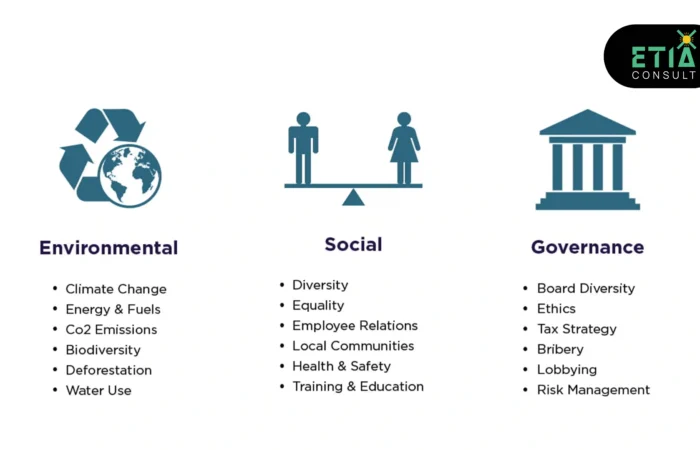
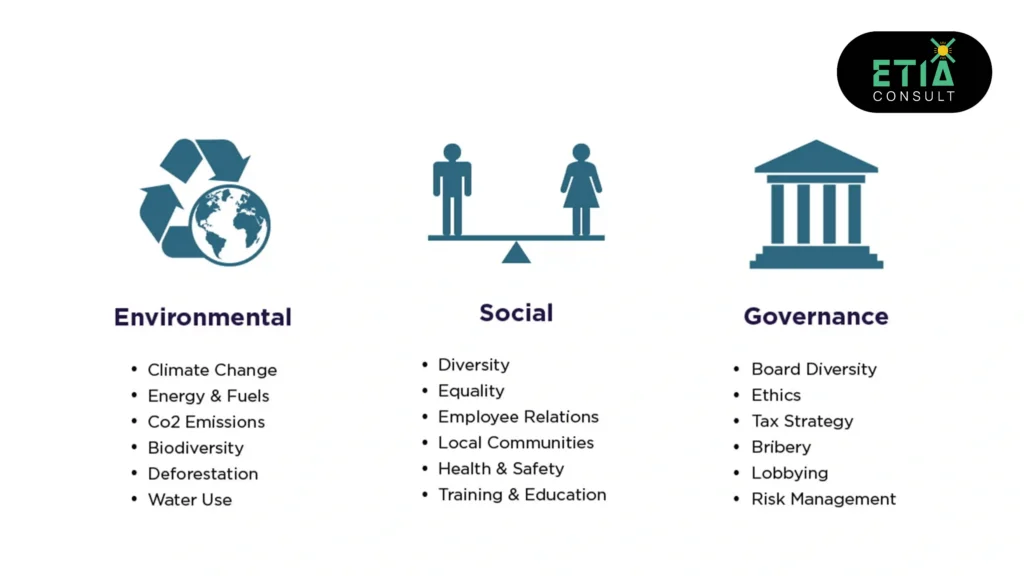
The term ESG refers to environmental, social, and governance standards that measure how responsibly a company operates. Years ago, ESG was mostly associated with voluntary sustainability reports and investor presentations. Today, it directly impacts financing, regulations, reputation, supply chains, and customer trust.
Businesses are now expected to demonstrate accountability in areas such as:
This transformation has elevated ESG from a marketing initiative to a strategic necessity.
Many companies still misunderstand the difference between regulatory compliance and risk management. That confusion often creates gaps in business resilience.
The debate around ESG Compliance vs De-Risking is not about choosing one over the other. It is about understanding how they complement each other.
Compliance focuses on meeting legal, regulatory, and disclosure obligations. Companies follow required standards, submit reports, and align operations with applicable regulations.
Examples include:
Compliance ensures that businesses avoid penalties, legal issues, and reputational concerns related to non adherence.
De-risking goes further. It focuses on identifying vulnerabilities that could impact business continuity, profitability, or reputation in the future.
This includes:
A company may technically comply with regulations yet still remain highly exposed to long term risks. That is why businesses increasingly prioritize resilience alongside reporting.
Regulations are evolving rapidly across Europe. Investors, consumers, and stakeholders now expect organizations to demonstrate measurable sustainability performance.
A business that focuses only on ticking compliance boxes may still face:
Modern organizations must integrate sustainability into business planning, risk assessment, and strategic decision making.
This is where ETIAconsult creates measurable value. The firm helps businesses move beyond reactive reporting and toward proactive resilience planning.
One of the biggest regulatory developments in Europe is the Corporate Sustainability Reporting Directive. This directive significantly expands sustainability disclosure requirements for companies operating in the European market.
The directive requires organizations to provide transparent information regarding:
For many businesses, adapting to the Corporate Sustainability Reporting Directive can feel overwhelming. Data collection, reporting frameworks, and compliance alignment require expertise and careful execution.
ETIAconsult supports businesses through every stage of this process by simplifying reporting requirements and creating practical implementation plans.
Instead of treating reporting as a yearly headache, businesses can use the process to identify opportunities, reduce risks, and improve operational efficiency.
The conversation around ESG Compliance vs De-Risking has intensified because economic uncertainty is increasing globally. Climate volatility, geopolitical instability, rising costs, and changing consumer expectations are reshaping industries.
Organizations that fail to prepare may face significant exposure.
Floods, heatwaves, and resource shortages can disrupt operations and supply chains. Businesses without resilience planning may experience costly interruptions.
Investors increasingly evaluate sustainability performance before making funding decisions. Weak sustainability positioning can impact access to capital and increase borrowing costs.
Consumers now expect transparency and ethical business practices. Negative ESG performance can rapidly damage brand trust.
New sustainability regulations continue emerging across Europe. Companies that fail to adapt may face penalties or operational limitations.
ETIAconsult helps organizations identify these vulnerabilities early and implement practical solutions before problems escalate.

One of the most important aspects of long term sustainability is ESG integration. This means embedding sustainability principles directly into business operations and strategic planning.
Rather than treating ESG as a separate department, businesses integrate sustainability into:
Strong ESG integration creates more agile organizations that can adapt to changing market conditions.
Companies that successfully adopt this approach often experience:
ETIAconsult works closely with leadership teams to ensure sustainability becomes part of the company culture rather than an isolated initiative.

Many organizations struggle because sustainability efforts lack consistency or measurable direction. This is why established ESG frameworks are essential.
These frameworks provide structured guidance for:
Well designed ESG frameworks help businesses compare performance, improve transparency, and align with international expectations.
However, selecting the right framework requires expertise. Every business has different operational models, industry risks, and reporting obligations.
ETIAconsult helps companies choose frameworks that align with both regulatory requirements and long term strategic goals.
Investors are paying closer attention to sustainability than ever before. ESG performance is increasingly tied to:
Financial institutions now assess sustainability risks alongside traditional financial metrics. Businesses that demonstrate resilience and accountability are viewed as safer investment opportunities.
This is why Sustainable Finance continues gaining momentum across Europe.
Banks and investors increasingly prioritize organizations that:
Strong sustainability positioning can improve access to Sustainable Finance opportunities while reducing investor concerns.
ETIAconsult helps organizations communicate sustainability performance effectively to stakeholders and financial institutions.
The business world is now entering what many experts call Corporate Sustainability 2.0.
In the past, sustainability initiatives often focused on branding or isolated environmental projects. Today, organizations are integrating sustainability into core business strategy.
Corporate Sustainability 2.0 emphasizes:
This evolution reflects a broader understanding that sustainability is not separate from profitability. It directly influences business continuity and competitive advantage.
ETIAconsult helps companies navigate this transition with practical, scalable solutions designed for real business environments.
Every successful sustainability initiative begins with a clear ESG strategy.
Without a structured plan, businesses often struggle with fragmented initiatives, inconsistent reporting, and unclear priorities.
An effective ESG strategy should include:
ETIAconsult collaborates with businesses to create tailored strategies that align sustainability with operational realities and long term goals.
The objective is not simply to comply with regulations. The goal is to build stronger, more adaptable organizations.
Many companies initially approach sustainability because of regulatory pressure. However, they often discover significant operational and financial advantages along the way.
Some of the biggest ESG Benefits for Businesses include:
Organizations become better prepared for disruptions, regulatory changes, and operational challenges.
Customers increasingly prefer businesses that demonstrate accountability and transparency.
Strong sustainability performance can improve relationships with investors and financial institutions.
Energy efficiency, waste reduction, and optimized processes often reduce long term costs.
Businesses with strong sustainability performance are often better positioned in evolving markets.
Navigating modern sustainability requirements can be complex. Regulations evolve quickly, reporting standards differ, and risk factors vary by industry.
Working with an experienced ESG Consultant helps organizations avoid common mistakes while accelerating implementation.
An experienced ESG Consultant can assist with:
ETIAconsult provides businesses in the Netherlands with practical, business focused sustainability guidance tailored to industry specific needs.
Their approach balances compliance requirements with long term resilience and growth planning.
The future of sustainability is no longer about choosing between compliance and resilience. Businesses need both.
The discussion around ESG Compliance vs De-Risking reflects a broader transformation in how organizations think about growth and responsibility.
Compliance protects businesses from immediate legal and regulatory issues.
De-risking protects businesses from future uncertainty.
Together, they create organizations that are:
Companies that embrace this mindset early are more likely to thrive in the evolving European business landscape.
ETIAconsult understands that sustainability is not just about reports and regulations. It is about building future ready businesses.
Based in the Netherlands, ETIAconsult supports organizations with:
Their practical and collaborative approach helps businesses turn sustainability challenges into business opportunities.
Instead of offering one size fits all solutions, ETIAconsult develops customized strategies that align with each organization’s operational realities and long term ambitions.
For companies navigating complex sustainability requirements, ETIAconsult provides clarity, structure, and strategic direction.
The conversation around ESG Compliance vs De-Risking is shaping the future of modern business. Regulations are becoming stricter, investors are becoming more selective, and operational risks are becoming more complex.
Businesses that treat sustainability as a strategic priority rather than a reporting obligation will be better positioned for long term success.
Compliance helps organizations meet legal expectations.
De-risking helps them survive and grow in uncertain conditions.
Together, they create stronger businesses capable of adapting to a rapidly changing world.
ETIAconsult helps organizations across the Netherlands navigate this journey with confidence. By combining sustainability expertise with practical business insight, the company enables clients to move beyond compliance and build lasting resilience.
ESG compliance focuses on meeting legal and regulatory sustainability requirements. ESG de-risking focuses on identifying and reducing future operational, financial, and reputational risks related to sustainability issues.
ESG is important because it impacts investor confidence, customer trust, operational resilience, financing opportunities, and regulatory compliance.
The Corporate Sustainability Reporting Directive requires companies operating in Europe to provide more detailed sustainability disclosures related to environmental, social, and governance performance.
ETIAconsult helps businesses with sustainability reporting, risk assessments, regulatory alignment, ESG planning, and long term resilience strategies tailored to organizational goals.
Long term benefits include improved risk management, stronger investor relationships, better operational efficiency, enhanced reputation, and increased business resilience.
Adding {{itemName}} to cart
Added {{itemName}} to cart