



A Scope 3 emissions management is a starting point, not an operating capability. Part 1 examined how energy companies can connect enterprise activity data with external evidence, calculation methods and quality controls that foundation makes a credible baseline possible. The next challenge is to use that information repeatedly: to identify material suppliers and activities, select interventions, assign ownership and determine whether emissions are changing for the reasons management expects.
That requires more than an annual calculation. It requires an intelligence layer between source data and decision-making, supported by a clear data roadmap and operating model.
The Scope 3 emissions management Platform Is an Intelligence Layer
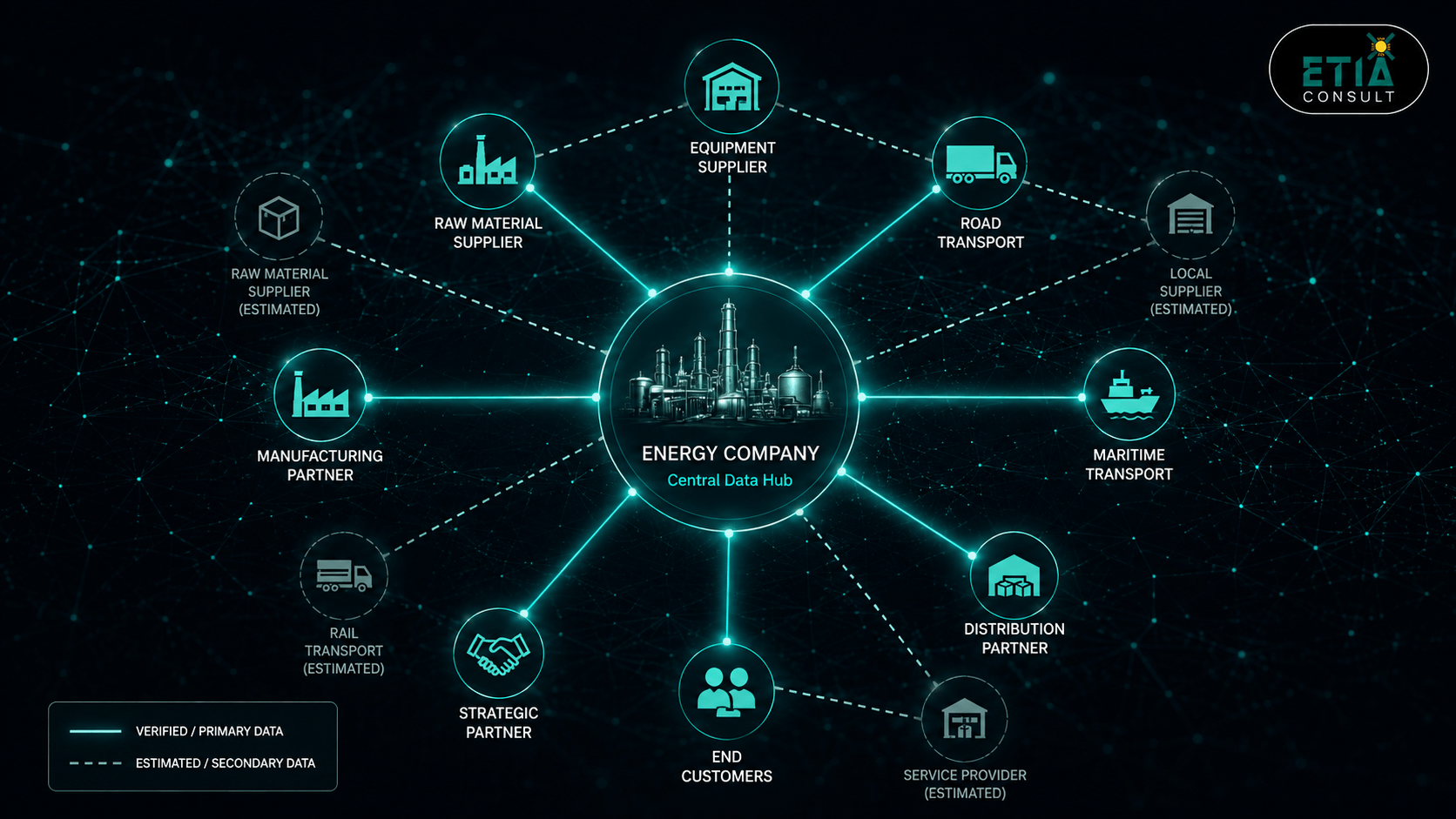
A fit-for-purpose Scope 3 capability should connect to ETRM, ERP, procurement, logistics and asset systems rather than replicate them. It should add the capabilities that are specific to emissions management:
Data Ingestion
Receive structured system data alongside supplier spreadsheets, PDFs, reports, invoices and utility records.
Category & Activity Mapping
Map transactions and activities to Scope 3 categories, calculation methods and emissions factors.
Calculation Governance
Control methodologies, factor libraries, unit conversions, allocations, exclusions and version histories.
Data-Quality Management
Distinguish estimates, activity-based calculations and supplier-specific information, with visible improvement priorities.
Supplier Engagement
Target requests based on materiality and retain a persistent supplier profile instead of disconnected annual questionnaires.
Source Traceability
Connect each material result to its original evidence, assumptions, calculation version and approval history.
Decision Support
View emissions by category, supplier, product, geography or business unit alongside targets and reduction initiatives.
The objective is not a larger carbon database. It is a controlled line from source evidence to calculation, decision and reduction.
Materiality Should Determine the Data Roadmap
A common failure mode is to pursue the same level of precision across the entire value chain. That is expensive, slow and unlikely to improve the most important decisions. A more effective approach places Scope 3 activities into four groups:
High Emissions, High Influence
Prioritise primary data and active reduction programmes these are the activities where the business has both the biggest footprint and the most leverage to change it.
High Emissions, Lower Influence
Improve calculation quality, build partnerships and identify collective interventions where direct control is limited.
Lower Emissions, High Strategic Relevance
Maintain sufficient evidence where regulatory, customer or transition significance is high, even if the volume is small.
Lower Emissions, Lower Relevance
Use controlled secondary data and review periodically rather than investing scarce engagement capacity here.
This prioritisation should be dynamic. A category may become more significant after an acquisition, a change in energy sourcing, a major infrastructure programme or a shift in the product portfolio.
From Inventory to Intervention
Reporting a Scope 3 number does not reduce it. The business value emerges when the data identifies an intervention and allows the organisation to track whether it worked. For energy and multi-utility companies, this can support decisions such as:
- Which suppliers should be included in a focused decarbonisation programme?
- Which purchased materials or capital assets account for the largest upstream footprint?
- Where would product-specific data materially improve an investment or sourcing decision?
- Which logistics routes or service providers warrant closer analysis?
- Are reductions the result of operational change, supplier performance, portfolio change or an updated factor?
- Which targets depend on actions by suppliers or customers rather than direct company control?
This is a better test of Scope 3 maturity than the number of questionnaires issued or dashboards produced.
Five Principles for a Durable Scope 3 Capability
Start With Materiality, Not Maximum Data Collection
Screen the full value chain, but concentrate better data and engagement on the activities that matter most.
Preserve Estimates and Label Them
Make the source, age, representativeness and limitations of estimates visible so users understand the confidence they can place in them.
Design Supplier Engagement Around Capability
Allow suppliers to provide activity data or source documents when they cannot produce a complete emissions calculation.
Integrate Rather Than Duplicate
Use established enterprise systems as sources of operational truth and add the emissions-specific information they were not intended to hold.
Build for Repetition and Assurance
Every reporting cycle should become faster, more consistent and more defensible.
The Real Objective Is Controlled Improvement
No large organisation begins with perfect Scope 3 data. The important distinction is between an inventory that repeats the same weaknesses every year and a system designed to improve. A mature capability shows where secondary estimates remain, why they were selected, which suppliers have provided primary information, how data quality has changed and where the next improvement effort should be directed.
Credibility does not require pretending uncertainty has disappeared. It requires managing uncertainty systematically.
Scope 3 Extends the Enterprise
The Scope 3 challenge is not that energy companies lack systems. It is that emissions extend beyond those systems and often beyond the company itself.
The organisations that make progress will connect existing business data with supplier evidence, robust calculation methods and a clear data-quality roadmap. That creates a repeatable capability for deciding where to engage, where to invest and where emissions can genuinely be reduced.
How SPRIH Supports the Operating Capability
These management requirements align with how SPRIH turns sustainability data into action. The AI-native platform supports multi-format ingestion, supplier intelligence and engagement, calculation and data-quality governance, audit-ready traceability, emissions analytics and logistics modelling. ETIAconsult provides the implementation layer: connecting SPRIH with enterprise systems, defining controls and embedding the resulting information into business-as-usual decisions and operating processes.
Frequently Asked Questions
Key questions on supplier data quality, product footprints and the ETIAconsult approach
Turn Scope 3 Intelligence
into Action
ETIAconsult helps energy companies implement the technology, controls and operating processes required to move from fragmented emissions data to repeatable decisions and measurable interventions.