


The energy sector is experiencing one of the most significant periods of change in its history. Rising customer expectations, evolving regulatory requirements, sustainability commitments, and rapid technological advancements are reshaping how energy organizations operate. This is where digital transformation consulting plays a vital role, helping organizations develop practical strategies, align technology investments with business objectives, and manage change effectively. This case study explores how a fictional yet realistic energy organization accelerated its digital transformation journey through a structured consulting approach. While every business has unique challenges, the lessons reflect common opportunities across the energy industry in the Netherlands and the wider EU.
The Challenge: A Company Ready for Change
Consider an established regional energy provider serving residential, commercial, and industrial customers. Over several decades, the company had built a reliable reputation. However, its internal operations depended heavily on aging systems that no longer supported modern business requirements.
Several challenges had begun affecting overall performance:
- Manual operational processes
- Disconnected data across departments
- Slow customer service response times
- Limited operational visibility
- Rising legacy system costs
- Difficulty adapting to new regulation
Leadership recognized that isolated software upgrades would not solve these issues. A comprehensive transformation strategy was required.
Defining the Transformation Objectives
Before introducing new technology, consultants worked closely with leadership to establish measurable business innovation. Rather than focusing solely on digital tools, the project emphasized business outcomes.
Establishing these priorities created a clear foundation for every subsequent decision.
The Role of Digital Transformation Consulting
Successful digital transformation consulting extends well beyond recommending software platforms. Consultants first conducted a comprehensive assessment of the organization’s existing environment, reviewing business workflows, technology infrastructure, employee capabilities, data management practices, governance structures, and customer service operations.
The objective was to understand not only where technology could improve performance but also where organizational processes required redesign. Transformation succeeds when technology supports better business operations rather than simply replacing existing systems.

Building a Technology Modernization Roadmap
Following the initial assessment, consultants developed a phased technology modernization roadmap. Attempting to replace every system simultaneously would have introduced unnecessary operational risks, so modernization occurred in carefully planned stages.
Infrastructure Upgrades
Improved system reliability while preparing the organization for future digital initiatives.
Core Application Integration
Core business applications were integrated to improve information sharing across departments.
Advanced Analytics & Reporting
Provided leadership with greater operational visibility across the business.
This structured approach minimized disruption while allowing employees to adapt gradually.
Streamlining Operations Through Process Optimization
Technology alone rarely solves operational challenges. Many existing workflows had evolved over years of incremental changes, creating unnecessary complexity, so consultants focused heavily on process optimization before implementing new digital solutions.
- Eliminating duplicate activities performed independently across departments
- Standardizing workflows to reduce duplication and improve consistency
- Automating repetitive administrative processes
- Improving cross-functional collaboration through shared digital platforms
Simplified processes increased efficiency while reducing operational delays.
Managing Enterprise Transformation Beyond Technology
One of the most important lessons from this case involved recognizing that enterprise transformation is fundamentally about people. Employees often feel uncertain when familiar systems and processes begin changing. Ignoring this human element frequently leads to resistance and slower adoption.
Leadership Engagement
Senior executives communicated the purpose of transformation consistently throughout the project.
Employee Training
Comprehensive learning programs helped staff develop confidence using new systems.
Continuous Feedback
Regular feedback sessions allowed employees to identify challenges while suggesting practical improvements.
This collaborative approach strengthened employee participation while reducing implementation risks.
Leveraging Data for Decision-Making and Innovation
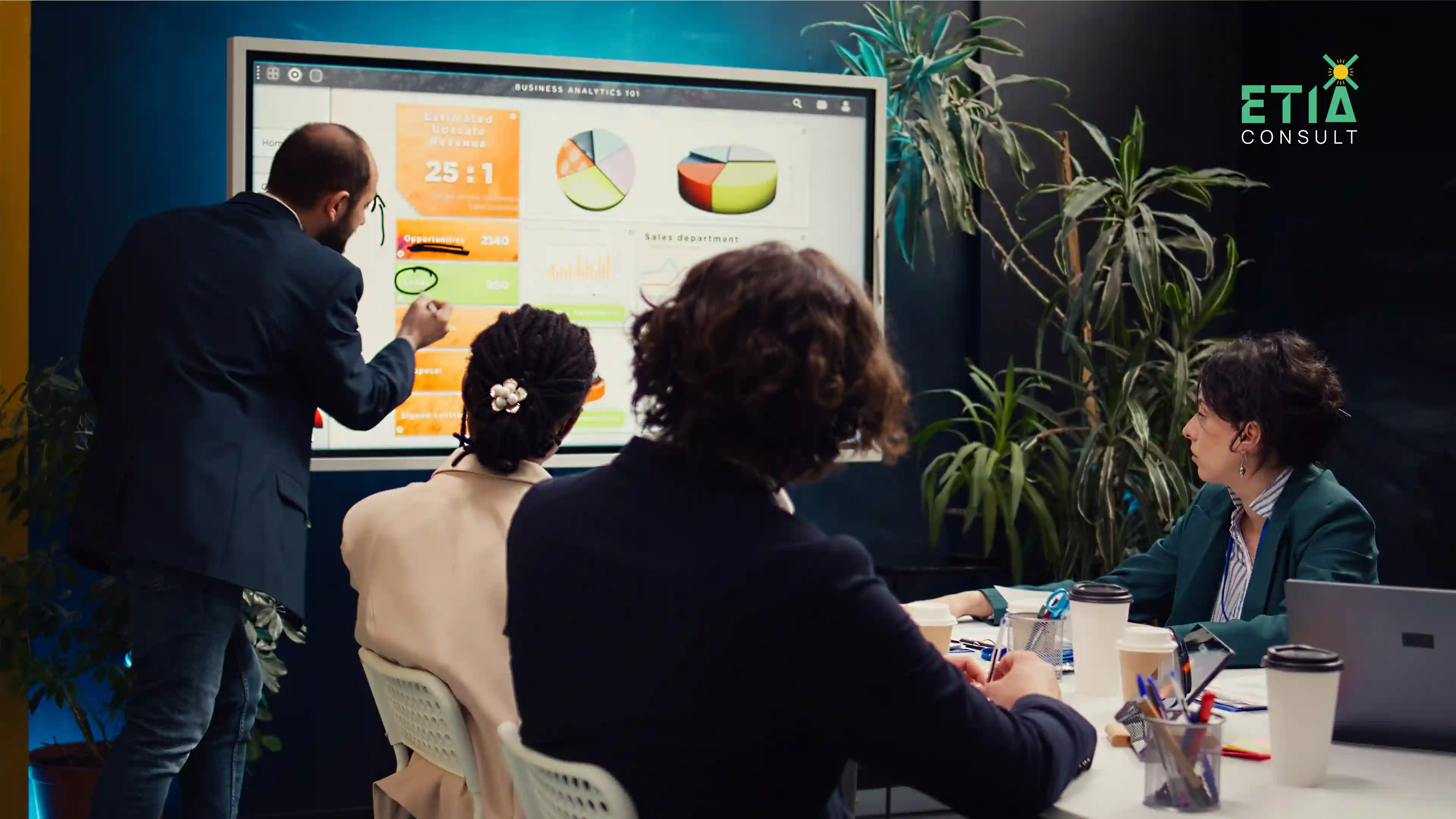
Previously, operational information existed across multiple disconnected systems, and managers often spent considerable time gathering reports before making decisions. The new digital environment centralized key operational data, giving leadership access to dashboards displaying:
Access to reliable information enabled faster, more confident decision-making throughout the organization. Following modernization, the organization introduced these additional initiatives, and became increasingly proactive rather than reactive. Innovation shifted from occasional projects to an ongoing organizational capability.
Measuring Project Success
Every successful transformation requires measurable outcomes. The consulting team established performance indicators before implementation.
Although transformation remained an ongoing journey, measurable progress demonstrated the value of the initiative.
Lessons for Energy Organizations
Begin With Business Objectives
Technology should always support clearly defined organizational goals.
Modernize Gradually
Phased implementation reduces disruption while improving long-term adoption.
Prioritize People
Successful transformation depends as much on employee engagement as technological capability.
Improve Processes First
Efficient workflows maximize the value of digital investments.
Measuring progress continuously helps organizations refine strategies throughout implementation. These principles remain relevant regardless of organizational size or operational complexity.
Why Consulting Services Matter
Experienced consulting services provide valuable perspective throughout complex transformation initiatives, contributing expertise in strategic planning, technology evaluation, change management, process redesign, risk mitigation, and performance measurement. Their independent perspective often helps organizations identify improvement opportunities that internal teams may overlook. Through technology integration and strategic consulting, ETIAconsult aligns technological decisions with measurable business outcomes for organizations across the Netherlands and the EU.
Frequently Asked Questions
Key questions on digital transformation consulting for energy organizations
Accelerate Your Own Digital
Transformation Journey
ETIAconsult helps energy organizations in the Netherlands and across the EU modernize technology, streamline operations, and manage change with confidence.