
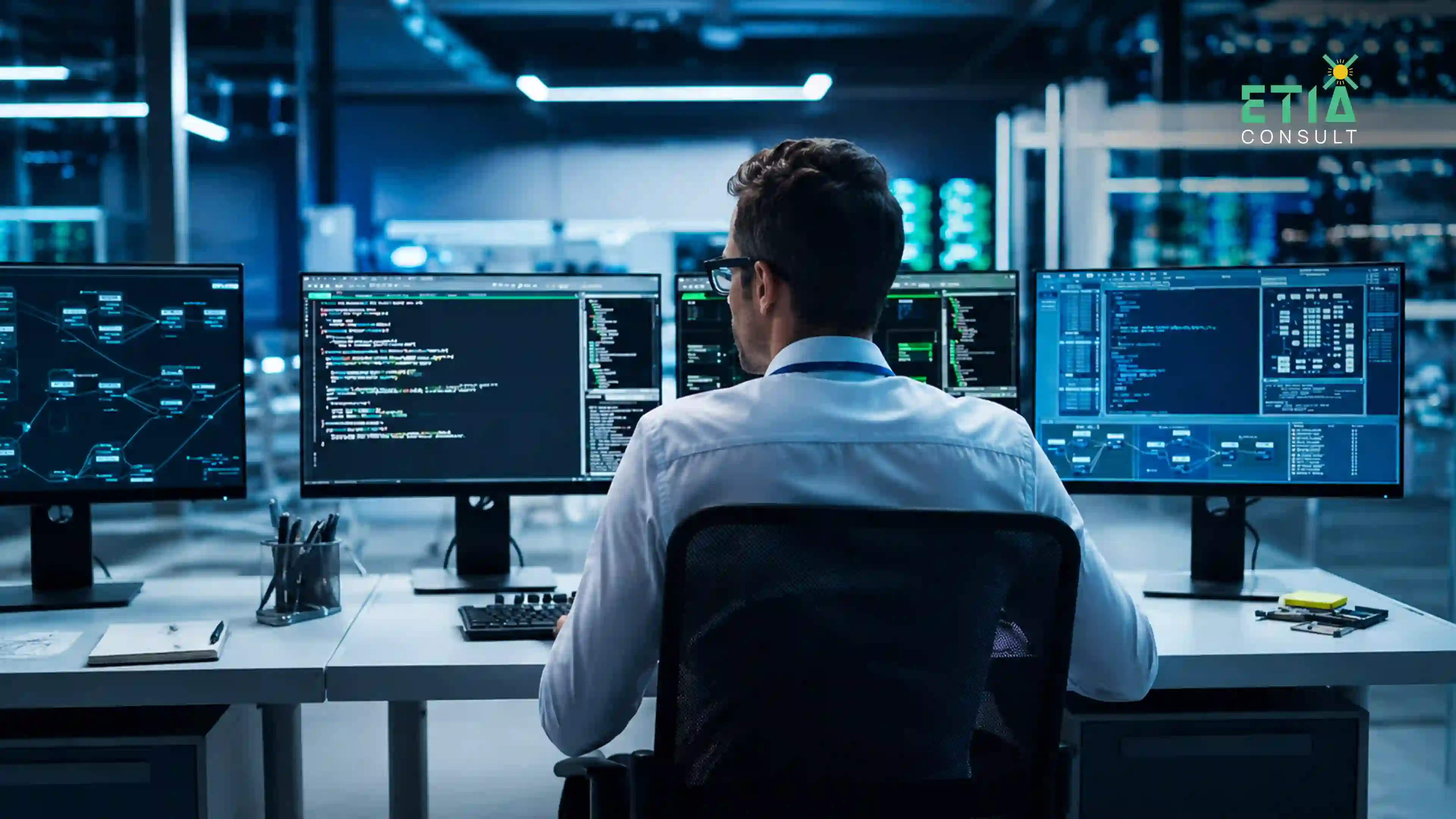

Energy and utility companies operate some of the most important systems in modern society. Electricity generation, transmission, distribution, oil and gas operations, water systems, and other essential services depend on interconnected technologies that must remain reliable and available. That connectivity, however, also creates serious cybersecurity challenges. A cyber incident affecting an energy organisation can go far beyond a compromised computer — it can affect operational systems, business continuity, customer services, physical processes, and public confidence. This makes energy cybersecurity an important pillar of both technology management and operational resilience — one that demands a structured, continuously improving programme rather than ad hoc responses to individual incidents.
Why Cybersecurity Matters in the Energy Sector
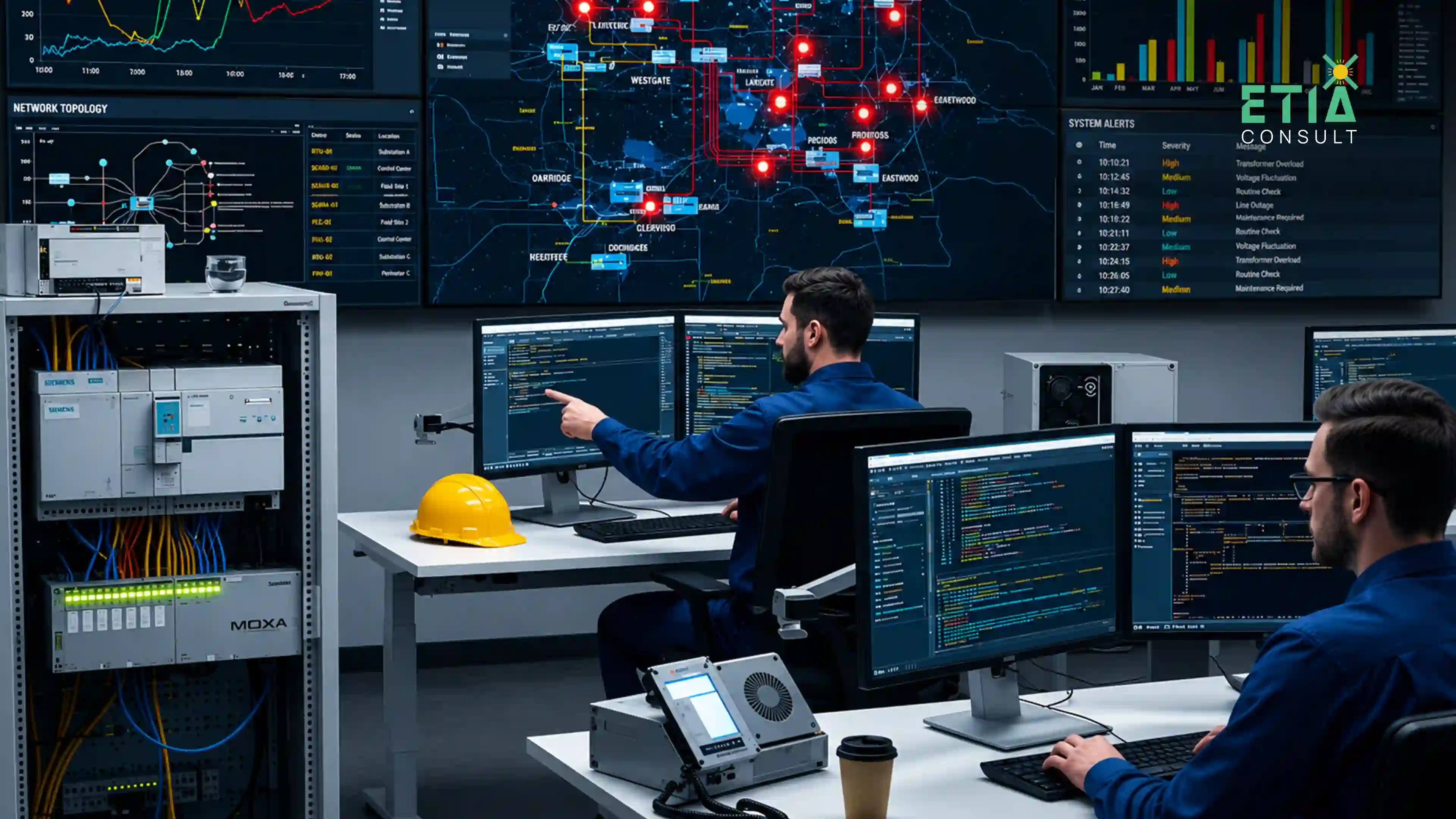
Energy organisations operate a combination of information technology and operational technology. IT systems generally support business functions, while OT systems monitor and control physical processes — from electricity generation turbines and grid switching equipment to pipeline pressure management and water treatment dosing systems. This creates a particularly complex security environment where a compromise in one domain can have consequences that extend far into the other.
The European Union’s ENISA (EU Agency for Cybersecurity) consistently identifies energy as one of the highest-risk critical infrastructure sectors — with attack frequency and sophistication increasing year-on-year. The NIS2 Directive, which came into force across EU member states in 2024, has significantly expanded mandatory cybersecurity obligations for energy operators — making compliance and operational security genuinely inseparable for the first time. This directly intersects with the digital transformation agenda that is simultaneously expanding the attack surface of energy organizations as they connect more systems, sensors, and third-party platforms.
An organisation in the energy sector may need to protect a wide range of interconnected environments simultaneously:
- Corporate IT infrastructure and business applications
- Customer and billing management platforms
- Cloud applications and SaaS services
- Remote access and VPN systems
- Email, collaboration, and HR platforms
- Third-party integration and API connections
- Generation and production control systems
- Transmission and distribution network equipment
- Industrial control systems (ICS) and DCS
- SCADA (Supervisory Control and Data Acquisition)
- Field devices, RTUs, and PLCs
- Legacy equipment with long replacement cycles
A strong cybersecurity programme must protect information systems while also considering operational technology, industrial environments, third-party connections, employees, and physical infrastructure — not as separate security programmes but as a unified, coordinated defence architecture.
Strengthen Critical Infrastructure Security
Critical infrastructure security begins with knowing exactly what needs to be protected. Energy and utility companies should maintain a clear, current understanding of their important assets, systems, dependencies, and external connections — because you cannot protect what you have not mapped. Asset visibility is the foundation on which every other security control depends.
This is especially relevant in the context of the evolving regulatory landscape for energy companies, where NIS2 compliance requires documented asset inventories, risk assessments, and documented security controls across all critical systems — making operational security and regulatory compliance genuinely inseparable disciplines.
Building an Effective Asset Inventory
An effective asset inventory should identify hardware and software, OT and IT environments, network connections and remote access points, critical applications, external service providers, and legacy equipment — classified according to their importance to safety, operations, service availability, and business continuity.
- Hardware and software inventory — complete, maintained registry of all devices, applications, and versions across IT and OT environments, updated whenever systems change
- Network connection mapping — documented understanding of all communication paths between systems, zones, and external parties including cloud services and vendor connections
- Remote access point identification — every point through which external access is possible, with documented justification and monitoring controls for each
- Legacy equipment classification — systems that cannot be patched or replaced on standard cycles, with compensating controls documented for each identified gap
- External service provider registry — all third parties with system access, classified by access level, criticality, and the monitoring controls applied to each connection
Separate IT and OT Environments — and Strengthen OT Security
Traditional IT security practices cannot always be applied directly to operational technology. OT environments often have long equipment lifecycles, strict availability requirements, and legacy technologies that cannot be patched or replaced as easily as modern business systems. Applying standard IT patching cycles or endpoint agents to active OT environments without careful validation can cause unintended operational disruptions — sometimes with safety implications.
Network segmentation helps reduce unnecessary connections between environments and limits the pathways through which an incident in one domain can propagate into another. This principle is central to OT security and to the broader operational risk management discipline that ETIAconsult applies across energy sector technology environments.
Network Segmentation
Separating critical OT networks from corporate IT networks — restricting communication between zones and enforcing zone crossing only through authenticated, monitored, and logged gateways that create a defensible perimeter between business and operational environments.
Secure Remote Access Controls
Using secure remote-access mechanisms with multi-factor authentication, session recording, and time-limited access grants — ensuring that vendor and contractor remote connections to OT systems are controlled, audited, and can be terminated instantly when no longer required.
Continuous OT Network Monitoring
Passive monitoring of OT network traffic for unusual activity — detecting anomalies, unauthorized communications, and potential threats without disrupting the real-time availability requirements of operational systems that active scanning could compromise.
OT Asset Inventory Management
Maintaining accurate, continuously updated inventories of OT assets — including firmware versions, communication protocols, vendor dependencies, and end-of-life status — providing the visibility needed to assess vulnerability exposure and prioritize security investment.
Security teams should work closely with engineering and operations personnel because a security change that appears sensible from an IT perspective could have unintended operational consequences in an OT environment. The most effective OT security programmes are built through genuine cross-functional collaboration — not imposed by IT teams unfamiliar with industrial operational realities.
Build Cyber Resilience — Not Just Prevention
No security programme can guarantee that an organisation will never experience a cyber incident. For this reason, cyber resilience is just as important as prevention — and arguably more operationally valuable, because resilience determines how quickly and completely the organisation recovers when prevention fails. A resilient energy organisation can detect suspicious activity early, contain affected systems, maintain critical operations where possible, recover essential services rapidly, investigate thoroughly, and improve controls after the event.
This resilience principle connects directly to the operational continuity priorities that ETIAconsult addresses in its operational efficiency advisory — because an unplanned operational outage caused by a cyber incident carries the same commercial and reputational costs as any other unplanned disruption, regardless of cause.
Develop and Test Business Continuity Plans
Business continuity and disaster recovery plans should be tested through realistic exercises rather than simply documented. Exercises reveal practical weaknesses — unclear responsibilities, outdated contact information, insufficient backups, or previously unrecognised dependencies — that tabletop reviews alone do not expose. Testing frequency should reflect the criticality of the systems involved and the pace of organisational change.
Maintain Secure, Tested Backups
Critical systems and data should have appropriate backup strategies with protection against accidental deletion, hardware failure, and ransomware. Organisations should regularly verify that backups can actually be restored — not merely that backup jobs are completing. Where appropriate, offline or isolated backup copies for critical systems provide an additional recovery option when network-connected backups are also compromised.
Establish Clear Incident Response Procedures
Incident response plans should define detection, escalation, containment, communication, recovery, and documentation procedures — with clear role assignments for each phase. Plans should address both IT and OT incidents, recognising that the response to a compromised business system differs significantly from a response to a compromised SCADA system where operational and safety considerations take precedence.
Coordinate with Relevant External Parties
Energy organisations should establish pre-existing relationships with national cyber authorities, sector information sharing groups, ENISA reporting channels, and relevant law enforcement contacts — so that when an incident occurs, external coordination can begin immediately rather than starting from scratch while the incident is active.
Document Lessons Learned After Every Incident
Post-incident reviews should produce documented lessons — identifying what the organisation detected, what it missed, how response could have been faster or more contained, and what controls would reduce the likelihood or impact of similar incidents in the future. This learning loop is what converts individual incidents into organisational security improvement.
Control Identity and Access Management
Compromised credentials remain one of the most common and effective pathways into energy organisations — making identity and access management a foundational component of industrial cybersecurity. Applying the principle of least privilege — giving employees, contractors, and systems only the access they genuinely require for their specific role — limits the damage that can be caused by any single compromised account or insider threat.
Multi-Factor Authentication (MFA)
Enforcing MFA across all systems — particularly remote access, administrative accounts, cloud applications, and any connection into OT environments — significantly raises the bar for credential-based attacks, even when passwords are successfully phished or brute-forced.
Privileged Access Management (PAM)
Managing and monitoring privileged accounts — the administrative credentials that have the broadest access to critical systems — through dedicated PAM solutions that enforce session recording, time-limited access grants, and just-in-time privilege escalation rather than persistent administrative rights.
Regular Access Reviews
Periodic reviews of all user accounts, permissions, and remote access grants — removing accounts that are no longer required and reducing permission levels that have expanded beyond current operational need. Prompt removal of accounts when employees, contractors, or vendors no longer require access is one of the highest-return access hygiene practices available.
Controlled Remote Access for OT Systems
Remote access to operational systems — particularly by external vendors and maintenance providers — should be limited, monitored in real time, time-restricted to the duration of the specific activity, and revocable instantly. Persistent always-on VPN access to OT environments for vendors represents an unnecessary and controllable risk that most organisations can eliminate with relatively straightforward process and technology changes.
Protect Against Phishing and Social Engineering
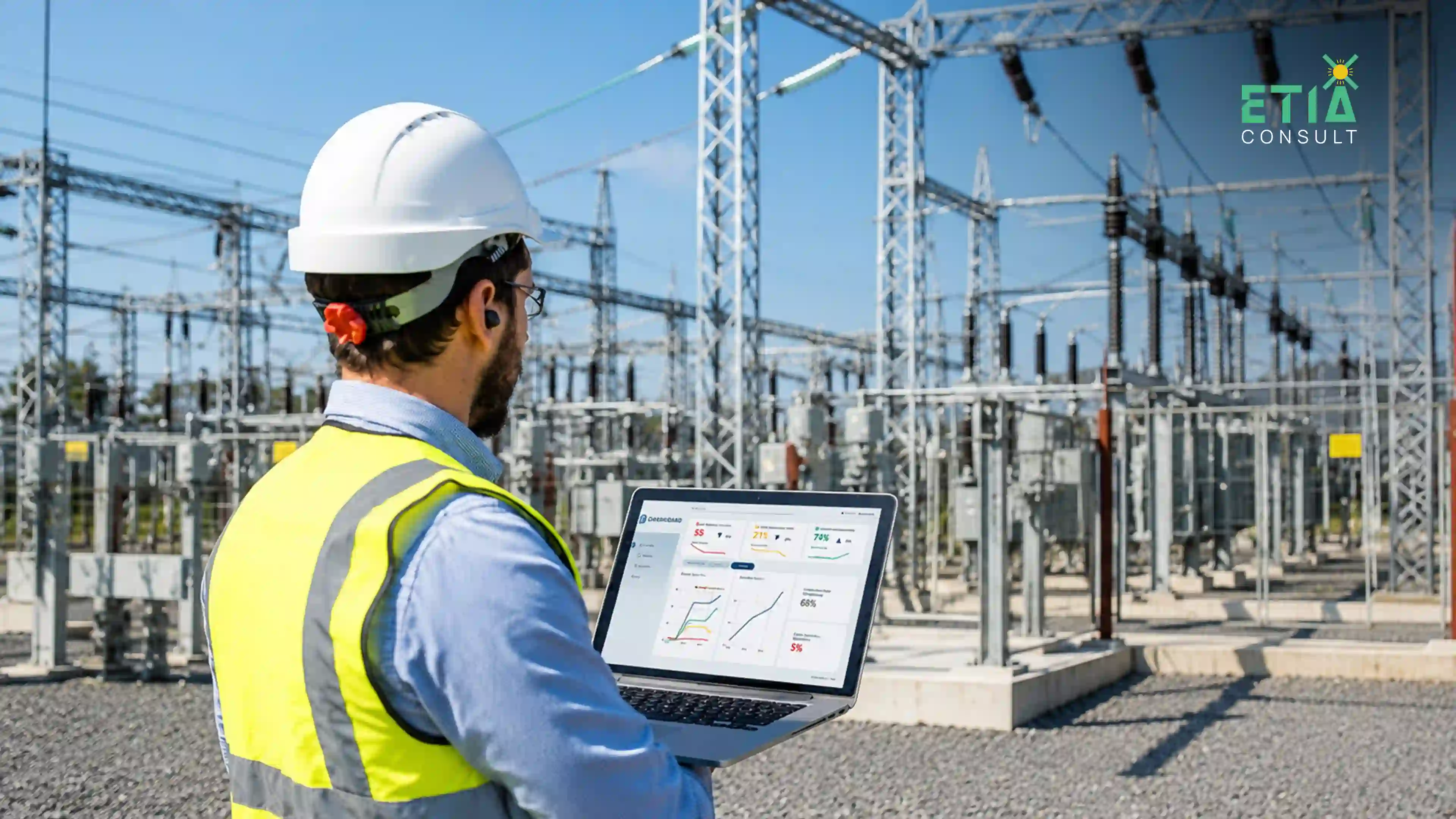
Technology alone cannot address every cybersecurity risk in an energy organisation. Employees remain both the last line of defence and, without adequate awareness, a significant vulnerability — making security awareness training an essential component of any comprehensive energy cybersecurity programme. The most sophisticated technical security controls can be bypassed by a single well-crafted phishing email that successfully captures credentials from an employee with privileged access.
Training should focus on building recognition and response skills rather than creating suspicion that paralysed employees are afraid to click anything. The objective is practical confidence — helping people recognise unusual behaviour and know exactly what to do when something does not look right, so that reporting becomes the natural response rather than hoping the problem will resolve itself.
Manage Third-Party Cybersecurity Risks
Energy companies depend on contractors, technology vendors, maintenance providers, software suppliers, and other external partners — each of whom may have access to systems, networks, or data that are critical to operational continuity. Each external connection can introduce additional risk, and a compromise of a trusted third-party relationship has the potential to bypass all the perimeter and internal controls that the organisation has invested in building.
This third-party exposure is amplified as technology integration deepens — connecting more systems, vendors, and platforms into the operational environment. Third-party risk management in the energy sector should include security requirements embedded in contracts, risk assessments before onboarding, and ongoing monitoring that extends the organisation’s security programme beyond its own perimeter.
Monitor Systems and Keep Security Continuously Improving
Early detection significantly improves an organisation’s ability to contain suspicious activity before it causes serious damage. Security monitoring across IT and OT environments — adapted to avoid unnecessary disruption to sensitive operational systems — provides the visibility needed to identify threats at the earliest possible stage of an attack. But monitoring is only valuable when it connects to response: alerts without clear escalation procedures and trained responders generate noise rather than protection.
Beyond monitoring, cybersecurity is not a one-time project. Threats evolve, technologies change, new vulnerabilities emerge, and organisations continuously introduce new systems and connections. A mature cybersecurity programme — aligned with frameworks such as the EU NIS2 Directive and NIST Cybersecurity Framework — should include regular reviews across all dimensions of the security programme. This continuous improvement orientation connects directly to the agile consulting approach ETIAconsult brings to operational improvement programmes for energy organizations.
Security Policy Reviews
Annual review of all security policies against current threat intelligence, regulatory requirements, and operational changes — ensuring that documented controls reflect current practice rather than becoming gradually disconnected from how the organisation actually operates.
Vulnerability Management Programme
Systematic identification, prioritisation, and remediation of vulnerabilities across IT and OT environments — adapted to the patching constraints of operational technology where availability requirements may delay remediation, requiring compensating controls in the interim.
Employee Awareness Programme
Ongoing security awareness — not a once-a-year compliance exercise, but regular communications, simulated phishing tests, and role-specific training that keeps security thinking active and current across the organisation throughout the year.
Regulatory Alignment Monitoring
Tracking evolving EU and national cybersecurity regulatory requirements — including NIS2 updates, sector-specific guidance from national authorities, and ENISA technical guidelines — to ensure security programme investment remains aligned with compliance obligations as they develop.
For energy organisations, cybersecurity is ultimately about protecting more than data. It is about helping ensure that essential services remain reliable, resilient, and available when people and businesses depend on them. The security controls that achieve this outcome must reflect operational realities, business priorities, and the real consequences of disruption — not just industry frameworks applied without consideration of context.
Frequently Asked Questions
Key questions on energy cybersecurity, OT security, and critical infrastructure protection
Ready to Strengthen Your Energy
Organisation’s Cyber Resilience?
ETIAconsult helps European energy and utility organisations build comprehensive cybersecurity programmes — covering critical infrastructure security, OT security, NIS2 compliance, incident response, and the continuous improvement frameworks that keep essential services protected.