


In recent years, businesses across the globe have experienced a major shift in how sustainability is perceived. What was once treated as a regulatory obligation has now evolved into a powerful business driver. Companies are no longer asking whether sustainability matters — they are asking how it can create long-term profitability, operational resilience, and competitive advantage. This new era is Corporate Sustainability 2.0 — and it is reshaping industries from energy and commodities to finance and manufacturing.
Understanding the Shift: Compliance to Strategic Sustainability
For many years, organizations approached sustainability with a narrow objective — regulatory compliance. Businesses created reports, followed environmental standards, and introduced limited green initiatives mainly to avoid penalties or reputational damage.
However, the global business environment has changed dramatically. According to the UN Principles for Responsible Investment, ESG considerations now directly influence trillions of dollars in investment decisions worldwide. Investors evaluate ESG performance before allocating capital. Customers choose brands aligned with environmental values. Governments introduce stricter climate regulations. Employees seek purpose-driven workplaces.
As a result, corporate sustainability is no longer about doing the minimum required. It is about creating long-term value while balancing economic performance, environmental responsibility, and social impact. Organizations that integrate sustainability into their core business models are finding new opportunities for innovation, efficiency, and market leadership.
Corporate sustainability is no longer a side department. It is becoming central to business strategy, financial planning, risk management, and digital transformation — especially in energy and commodity sectors.
What Is Corporate Sustainability 2.0?
Corporate Sustainability 2.0 represents the evolution of traditional sustainability practices into a more integrated, strategic, and performance-focused framework. Instead of treating sustainability as an isolated initiative, businesses are embedding it into every aspect of operations.
Corporate Governance
Transparent leadership structures, accountability frameworks, and ethical decision-making embedded across the organization.
Risk Management Integration
Climate risks, supply chain vulnerabilities, and energy volatility built into core risk management frameworks.
Energy Operations
Sustainable energy solutions integrated into daily operations — from procurement to trading and grid management.
Technology Adoption
Advanced analytics, AI, and digital platforms supporting technology integration for smarter, greener operations.
Financial Reporting
ESG-aligned financial disclosures and sustainability reporting that satisfy investor and regulatory requirements.
Customer & Stakeholder Engagement
Authentic sustainability commitments that build lasting trust with customers, communities, and supply chain partners.
This modern approach recognizes that sustainability is deeply connected to business resilience and profitability. Companies are now using sustainability metrics to guide investment decisions, improve operational efficiency, reduce energy waste, and unlock new revenue opportunities.
Why Businesses Can No Longer Treat Sustainability as Optional
The pressure on businesses to embrace sustainability is coming from every direction simultaneously — investors, regulators, customers, and employees. Here is why each stakeholder group is raising the bar:
Rising Investor Expectations
Global investors increasingly prioritize ESG-focused companies. Sustainable investment funds continue to grow rapidly — organizations with weak sustainability practices face difficulty attracting capital. Investors now view ESG as a signal of risk management maturity and operational resilience. For context on how this connects to sustainable finance, the shift is systemic and accelerating.
Customer Trust and Brand Reputation
Modern consumers are more informed than ever. Companies that fail to address sustainability concerns risk losing consumer trust, while businesses that embrace meaningful sustainability practices enjoy stronger customer loyalty and brand differentiation in increasingly crowded markets.
Increasing Regulatory Pressure
Governments and international regulatory bodies continue introducing stricter environmental reporting requirements, emissions targets, and climate-related disclosures. The EU's Corporate Sustainability Reporting Directive (CSRD) and the TCFD Framework are raising mandatory disclosure standards across Europe. A proactive business sustainability strategy allows companies to adapt faster and reduce long-term compliance risks.
Talent Acquisition and Retention
Employees increasingly want to work for organizations aligned with their values. Sustainability-driven businesses attract stronger talent and experience higher employee engagement. Purpose-driven workplaces are becoming essential for long-term workforce retention and organizational culture in competitive European labor markets.

The Connection Between Sustainability and Business Growth
One of the biggest misconceptions about sustainability is that it only increases operational costs. In reality, strategic sustainability consistently drives measurable financial benefits. Organizations embracing sustainable business growth are seeing improvements across efficiency, innovation, customer loyalty, and operational stability.
Cost Optimization Through Efficiency
Energy efficiency initiatives, waste reduction programs, and optimized supply chains significantly reduce operational expenses. For businesses in energy-intensive industries, smarter resource management creates both environmental and financial advantages — making decarbonization solutions not just ethical but economically compelling.
Innovation and Market Expansion
Sustainability often acts as an innovation catalyst. Companies are developing cleaner technologies, more efficient processes, and environmentally responsible products to meet changing market demands. This innovation creates opportunities for new revenue streams and stronger market positioning — particularly relevant to the green hydrogen and renewable energy transition taking shape across Europe.
Stronger Risk Management
Climate risks, supply chain disruptions, and energy volatility are now major business concerns. A forward-looking corporate sustainability approach helps organizations identify vulnerabilities early and build more resilient operational frameworks — aligning directly with best-practice risk management strategy.
Improved Stakeholder Relationships
Businesses that prioritize sustainability build stronger relationships with regulators, investors, customers, and communities. Trust and transparency are increasingly valuable assets in the modern business environment — particularly in the Netherlands, where environmental accountability expectations are among the highest in Europe.
ESG Transformation Is Reshaping Industries
Across sectors, ESG transformation is influencing how organizations operate, report performance, and plan for the future. Environmental, Social, and Governance frameworks are becoming central to decision-making processes at board level and beyond. The Global Reporting Initiative (GRI) standards and EU CSRD are formalizing what was once voluntary into mandatory practice.
Environmental
Reducing emissions, improving energy efficiency, and transitioning toward cleaner operations — especially critical in sustainable energy and commodities.
Social
Labor practices, diversity, employee well-being, and community engagement. Social responsibility now directly influences brand perception and investor confidence.
Governance
Accountability, ethical leadership, and transparent reporting. Businesses with effective ESG frameworks manage long-term risks more effectively.
Organizations with mature ESG frameworks consistently outperform peers on total shareholder return over 5-year periods. According to EU Sustainable Finance data, European companies with strong ESG ratings access capital at significantly lower cost than peers with weak sustainability profiles.
Sustainability in the Energy Sector Is Mission Critical
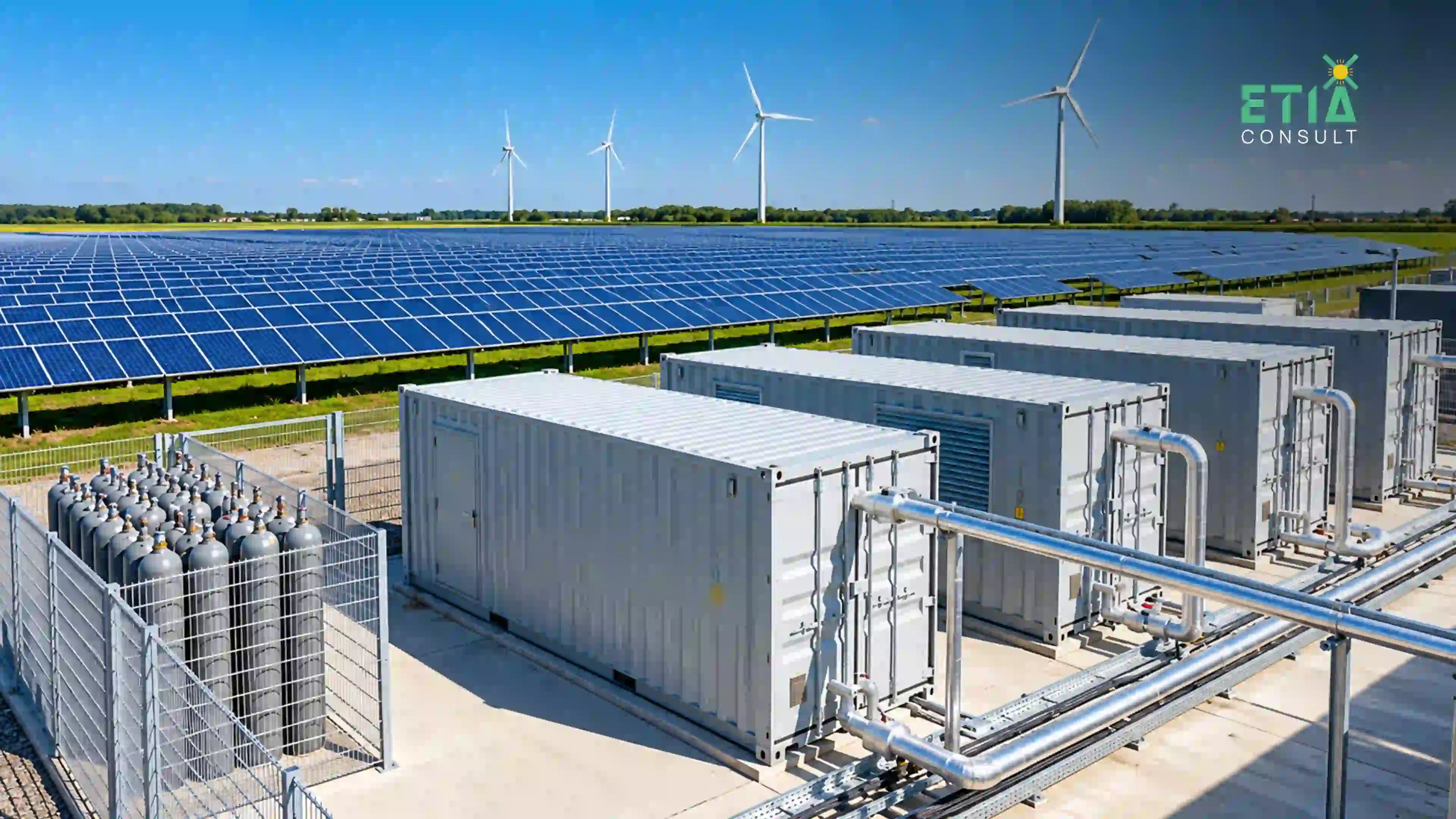
Few industries are experiencing transformation as rapidly as the energy sector. The global push toward decarbonization, renewable energy adoption, and smarter energy systems is forcing organizations to rethink traditional operating models. Sustainability in the energy sector now extends far beyond reducing emissions.
- Energy transition planning aligned with EU 2030 and 2050 climate targets
- Renewable integration — wind, solar, green hydrogen, and battery storage
- Carbon reporting and EU ETS compliance management
- Digital infrastructure modernization and technology integration
- Sustainable trading operations — from ETRM systems to AI-powered analytics
- Operational efficiency optimization across the full energy value chain
Energy companies that delay sustainability adaptation risk falling behind competitors already investing in future-ready technologies and strategies. This is why consulting firms with deep expertise in energy decarbonization are becoming increasingly valuable across the Netherlands and wider European market.
Building an Effective Business Sustainability Strategy
A successful sustainability approach requires more than good intentions. Businesses need structured planning, measurable objectives, and cross-functional alignment. Here is a proven step-by-step framework for embedding sustainability into your organization:
Define Clear Sustainability Goals
Identify realistic, measurable sustainability targets aligned with long-term business objectives — including carbon reduction targets, renewable energy adoption milestones, ESG reporting improvements, supply chain benchmarks, and resource efficiency initiatives.
Integrate Sustainability Across Departments
Sustainability should not exist in isolation. Finance, operations, technology, compliance, procurement, and leadership teams must collaborate to ensure sustainability goals are embedded into daily business processes — not siloed in a separate CSR function.
Use Data and Technology
Modern sustainability programs rely heavily on data analytics, automation, and digital monitoring systems. Real-time reporting and performance tracking help organizations measure impact and identify areas for improvement. AI-driven analytics are increasingly being deployed to accelerate sustainability intelligence.
Align with Recognized ESG Frameworks
Adopt globally recognized standards — GRI, TCFD, SASB, or EU CSRD — to ensure your sustainability reporting meets investor, regulatory, and stakeholder expectations. Well-structured ESG frameworks also make benchmarking and continuous improvement far more effective.
Prioritize Long-Term Value Creation
Short-term sustainability campaigns rarely create lasting impact. Businesses need strategies focused on long-term operational resilience, innovation, and scalable transformation. This is the core philosophy behind ETIAconsult's approach to strategic consulting for European energy organizations.
The Role of Technology in Corporate Sustainability
Technology is playing a central role in accelerating sustainability efforts across industries. Advanced analytics, artificial intelligence, cloud platforms, and digital energy systems are enabling businesses to optimize operations and reduce environmental impact simultaneously.
For organizations in energy and commodity markets, digital transformation supports sustainability across the full operational lifecycle:
- Energy optimization & smart grids
- Emissions monitoring & reporting
- Predictive analytics & AI forecasting
- Smarter trading systems (ETRM)
- Automated ESG reporting platforms
- Risk management improvements
- Carbon credit management
- Supply chain transparency tools
Technology-driven sustainability strategies help businesses become more agile, transparent, and operationally efficient — while simultaneously meeting the rising expectations of investors, regulators, and customers across European markets.
Why Expert Guidance Matters in Sustainability Transformation
Sustainability transformation is complex. Many businesses struggle with fragmented strategies, regulatory uncertainty, and implementation challenges. This is where specialized consulting firms provide significant value.
ETIAconsult, based in the Netherlands, helps organizations navigate sustainability challenges through tailored advisory services focused on energy transition, digital transformation, ESG readiness, and operational optimization. Whether you are a utility company navigating the clean energy transition or an industrial business aligning with EU sustainability mandates, ETIAconsult provides structured, actionable guidance.
Their expertise enables companies to move beyond reactive sustainability measures and adopt proactive strategies that support innovation and business performance — specifically for organizations in the Netherlands and broader European energy markets. Explore how ETIAconsult approaches sustainable transformation differently from generic consulting firms.
The most valuable sustainability transformations are not driven by compliance pressure. They are driven by organizations that genuinely connect sustainability performance to business strategy — and ETIAconsult's role is to build that connection with precision, expertise, and measurable outcomes.
The Future of Corporate Sustainability
The future of business will be shaped by organizations that successfully integrate sustainability into their operational DNA. In the coming years, sustainability performance will increasingly influence every dimension of business competitiveness:
Businesses that treat sustainability as a strategic opportunity rather than a compliance burden will be far better prepared for long-term success. Corporate sustainability is evolving into a critical business capability rather than a corporate responsibility checkbox — and the organizations embracing this shift today are building the competitive foundations for tomorrow.
The intersection of AI and financial technology with ESG is creating a new class of sustainability-intelligent businesses — organizations that can measure, predict, and optimize their environmental and social performance with the same precision they apply to financial performance. This is the defining competitive frontier of the next decade.
Frequently Asked Questions
Everything you need to know about Corporate Sustainability 2.0
Build Your Corporate
Sustainability 2.0 Strategy
ETIAconsult helps European energy and commodity organizations move beyond compliance into growth-driven sustainability — with expert ESG consulting, energy transition strategy, and digital transformation advisory.